General

Heat Stroke Treatment: What is the best way to cool off a heat stroke victim?

Monday, June 28th, 2010

What is the best way to cool off a heat stroke victim?

The simple answer? Using the resources at hand, aggressively lower the person’s body temperature to 39°C (102.2°F) as quickly as possible.  Anything longer than 30 minutes has the potential to have more profound and long lasting pathophysiologic effects. The debate about treatment revolves around the efficacy and safety of cold water/ ice bath immersion versus the mist/ fanning method.  When feasible, I advocate cold water immersion. In fact, it is at least twice as fast as the best misting methods.  It appears to be as safe and maybe safer when one considers the relative rates of cooling.

How so? Cold water dissipates heat from the body 20 to 30 times faster than air does at the same temperature. Evaporation speeds cooling but not as much. People argue against cold immersion for fear that the cold will induce vasoconstriction and/or shivering and therefore inhibit cooling or even increase body temperature.  If these factors are important, one would expect to find clinically relevant support in the medical literature. I have never found any. (Jump into cold lake and see what your body temperature does!) In addition, some worry that cold immersion for heat stroke will precipitate a cardiac arrest.  Again, the literature does not appear to support this concern clinically, even in the elderly.  In the end, temperature height and duration are the key factors linked to morbidity and mortality in heat stroke.

The real question regarding treatment should revolve around what means are at hand to modify those factors that caused the heat stroke to begin with.  First, stop the heat stress by leaving the environment and resting. If there is insufficient cold water for immersion, apply water in small droplets, like mist from a spray bottle, and get the air moving.  The misted water will evaporate more quickly and probably cool better than pouring a bottle over your patient’s head.  A combination of techniques can work well, too.  On the other hand, ice bags in the groin and around the neck do not cut it.  Because the problem with heat stroke is related to increased heat production and/or decreased dissipation, not the thermostatic readjustment in the hypothalamus seen with a fever, don’t use antipyretics (e.g., ibuprofen, acetaminophen).  And don’t forget about appropriate volume replacement.

Greg Friese from CentreLearn sent me this link to a pretty good, non-scientific article about recovery from heat stroke.

Q: Can ingestion of a steroid cream be equivalent to ingested prednisone for acute asthma or anaphylaxis?

Wednesday, January 6th, 2010

Q: I understand the steroids (e.g., prednisone) can sometimes be helpful in managing allergic reactions and asthma and that their use is part of your protocols for those conditions.  If there was nothing else available, would ingestion of a steroid cream be a suitable and effective alternative for prednisone?

After spending some time and given the resources I have at hand, I cannot give you a satisfactorily accurate answer.

Hydrocortisone is available in a pill form and is used particularly by people whose adrenal glands are absent or not functioning properly.  In this form it is rapidly absorbed in the gut.  4 mg of hydrocortisone equals 1 mg of prednisone.

Hydrocortisone is sold for topical use (on the skin) either as 0.5 or 1% creams or ointments.  1 gm of 1% topical hydrocortisone is equal to 10 mg of hydrocortisone.  That would give you nearly 300 mg in a 1 ounce/30 gm tube or, theoretically, the equivalent of 75 mg of prednisone.  What I don’t know and what I was unable to find out easily is what happens to hydrocortisone topicals on ingestion.   The cream is water soluble so, at least theoretically, it is more easily absorbed in the gut than the ointment. In addition, I could not find any pharmacokinetic (movement of a drug through the body) data about rates of absorption from the gut or subsequent blood levels and I have no idea what happens with either when exposed to digestive enzymes.  Aside from nausea and vomiting or diarrhea, the poison control literature suggests that a mouthful is not likely to be toxic.

So yes, theoretically, it could help but any potential effect would be unpredictable.  By the way, a tube cost about 5$US; thirty 20 mg tablets of prednisone tablets are less than 10$US.  I think you know what I would choose.

Are Smaller Venomous Snakes More Dangerous?

Tuesday, January 5th, 2010

Several times each year someone asks in class about the relative danger of an envenomation from a small versus a large crotaline (aka pit viper).  Some people are insistent that smaller snakes are more dangerous.  This idea has always felt counterintuitive to me.  The explanations seem fanciful at best.  Usually, people argue that larger (and therefore older) snakes possess some sort of volume control.  They argue that larger snakes hold back venom against humans because we are not food for them.  These larger snakes want to warn us with a strike but preserve venom for when it matters, like a meal.   I have been unable to find any science and none of the experts that I have spoken with can give a definitive answer one way or the other.  With the publication of a recent study, perhaps this theory will disappear.

This past December the Annals of Emergency Medicine published an article by Herbert and Hayes (2009; Volume 54 #6: p 831) in which they argue that a protective layer of denim over the skin may help to decrease the severity of an envenomation from a defensive strike by a southern Pacific rattlesnake. (I leave you to view the details and decide for yourselves.)   In their study, after provoking a test snake, they presented it a latex glove filled with warm water, one time bare and another time covered with a denim glove.  After a bite, they measured the venom in the water within the latex glove and, when used, on the denim glove.  The order of the trials were randomized and occurred 2 weeks apart.  They found that the amounts of venom measured were consistently and significantly greater from the larger (greater than 66 cm in length) versus the smaller (less than 55cm) snakes.

In the discussion section, they point out the volume differences as well as information from other sources that argue against the smaller is more dangerous theory.  Included are the facts that larger snakes are more likely to strike and that their strikes are more accurate.  Large snakes have longer fangs with larger hollow spaces allowing for deeper penetration and more venom flow.   They cite references (that I did not check) that claim that larger snakes cause more serious envenomations.  Herbert and Hayes state:

Thus, the more effective antipredator deterrent of bites from larger snakes may explain why they resort to biting more readily than smaller snakes.

And maybe Homo sapiens don’t learn to stand back.

Bottom Line

Although the results from this study do not definitively answer the question about size it does lend some scientific basis for debunking an unfounded belief.  Practically, of course, it does not really matter.  The anticipated problem of a venomous snake bite is an envenomation.  There is no good way to predict beforehand who will be envenomated, and if so, how bad it will be.  We treat what we see.  By the way, some skin covering, like denim, seems better than none.

Epinephrine, Not Antihistamines, Remain the Treatment for Anaphylaxis

Wednesday, December 30th, 2009

Q:  I have noticed that some outdoor organizations are moving away from carrying injectable epinephrine into the field.  Would an antihistamine (e.g., Benadryl) work just as effectively to treat allergic reactions?  What do you think about the Benadryl strips?

Even though some people are reluctant to carry epinephrine (delivered via autoinjectors like Epipens or a syringe) into the field, it continues to be the treatment of choice for anaphylaxis, a life threatening allergic reactions involving multiple body systems.  Specialty groups in Australia, Canada, the UK and US, have published position statements emphasizing this point.  Even relatively conservative organizations, including the American Red Cross and the American Heart Association, have advocated for training lay providers in its administration.  And yet, fear abounds, but not for medical reasons.  The fear is based on presumed legal issues.  The reason and questionable logic for this position is a topic for another blog.

Antihistamines like diphenhydramine (e.g., Benadryl) are often an effective treatment for simple urticaria (aka hives, welts, whelps).  Although urticaria frequently accompany anaphylaxis, they are absent in nearly a quarter of the cases.  While an antihistamine may suppress the urticaria that can accompany anaphylaxis, they will not reverse the life-threatening upper airway, pulmonary or vascular manifestations.  To suggest otherwise is incorrect and potentially dangerous.  Plus, there are many non-allergic causes of urticaria.

Transmucosal (through mucus membranes in the nose and mouth) administration represents a major step forward for some medications.  This route is potentially a great alternative to pills and awful tasting syrups for kids.  Medications administered this way are also better tolerated by people with nausea and vomiting and could be absorbed more quickly.  I have no experience with the strips and could not easily find information on their pharmicokinetics.  One web link from ABC news suggested that they would also be helpful when a reaction occurs in the mouth.  I think that advice is of questionable value.  An allergic reaction in the mouth with swelling can result in difficulty swallowing.  That sounds like anaphylaxis to me.

Transcutaneous (through the skin) is another potentially useful method for medication administration.  It has been particularly valuable for medications that need to be released slowly over time, obviating pill schedules or the need for needles and expensive pumps.  Current formulations of diphenhydramine cream are meant for topical (surface only) and not transcutaneous use.  They are poorly absorbed through the skin and therefore do not have predictable or significant absorption.

Cost seems to be the biggest downside of the strips, about 1$US as opposed to less than 0.1$US for an equivalently dosed capsule of generic diphehydramine.

Bottom Line

If your friend’s reaction to tree nuts is predictably simple urticaria, isolated to the trunk or limbs, an antihistamine in any form (other than a cream) should be equally effective.  Why pay more for the strips if they are no better?  But remember, allergy related urticaria can progress to signs and symptoms suggestive of airway, lung or vascular involvement at any time.  If they do, think anaphylaxis; think epinephrine.

I still believe that properly trained people should have epinephrine available when they are traveling outside of easy access to EMS.  It becomes essential if you are traveling with anyone known to have allergies to substances that could be encountered on the trip.

Q: What are your thoughts regarding Quickclot?

Tuesday, December 8th, 2009

Q: What are your thoughts regarding Quickclot? One of the kids in my program recently had a fairly severe laceration to the knee and the bleeding was hard to control/messy. If the stuff works, it seems it may reduce possible contact with blood borne pathogens to staff.

“…the stuff works..”  or “…they make a difference…”, those are the suppositions that get to the heart of the matter.  I have written previously about clot enhancers and have expressed my unabashed skepticism.

In the last few years, the original QuikClot that was supposed to stop all bleeding without any harmful effects has been reformulated to be cooler because of concerns about burns.  Reengineered again, it is available, impregnated in gauze.  But do any of these really work?  There are anecdotal reports and animal studies.  The claims made by Z-Medica that their products have saved hundreds of lives seem hyperbolic and unsubstantiated by anything more than individual or pooled testimonials.  Each new animal trial shows the new product to be better than the prior one, the one that was supposed to stop all bleeding.( http://www.z-medica.com)  This is not science, this is marketing.  I am not aware of any clinical trials that look at important human outcome in any meaningful way.  The fact that someone, like the army, is using something does not make it efficacious or safe.  And in addition to burns, there have been other problems reported with the older formulations.  I don’t believe that the science with the other leading products (chitosan-based: e.g., http://www.celoxmedical.com) is any better.

I completely understand why the military wants a product that will stop bleeding easily.  Think about it.  As with all combat, bleeding is the major pathway to death.  Field treatment has improved significantly but who wouldn’t want to do better for otherwise healthy young women and men?  What could be better than being able to pour something into an exsanguinating wound and have the bleeding stop, especially where a tourniquet cannot be applied?  It does not work that way with any product on the market.  It does seem that the gauze formulations of each have some promise.  They can be wrapped around a wound or tightly stuffed into deeper ones and then secured by a tight pressure wrap.  Assuming that the product added is safe and effective, it could enhance what already works.

What should you do?  We know that bandaging that is visually directed toward the bleeding site (well-aimed), stuffed in for deeper wounds, and then secured by a pressure wrap have a good track record.  This is certainly true for the vast majority of wounds we are likely to see in non-combat, civilian events.  There are no confounding substances and anyone can buy these materials easily and inexpensively.  On the other hand, the least expensive of either of the major clot enhancing products retail for about 10$ US and many are 25$ US and more.  But wouldn’t it be worth it to decrease exposure to potential m thinking FG and OHbloodborne pathogens?  If there is bleeding, there is blood around.  Whether you use the sachet containing QuikClot or either gauze impregnated product, you still have to apply it manually and hold it in place like plain gauze until secured.  Gloves, eye protection, and clothing are still your best protection.  And what are you going to use if you haven’t got a clot enhancer with you?

Thoughts and Tips Regarding the Risk of H1N1

Wednesday, November 11th, 2009

girl with the fluIt is difficult to know how to respond to H1N1.  Last spring schools were closing with the first whiff of a possible infection.  Now, kids who are sick are segregated until they can be sent home.  Schools are unlikely to be closed unless the numbers of absentees are large enough to prevent normal function or vulnerable populations are put at risk.

Based on research, plain surgical masks were felt to afford insufficient protection compared to the more expensive, fitted, N95 mask.  This week, the result of an important N95 vs plain mask study is being questioned because of the methodology used.  Still, this is a big deal, especially for at risk populations like young kids, pregnant women and people over 65.  Underlying conditions like asthma and other chronic illnesses can increase a person’s risk for a more severe illness.

Influenza virus can be broadcast about 3 feet from droplets generated by coughing and sneezing.    The virus laden droplets gain access and infect through eye and nose mucous membranes.  This initial contact is either direct or indirect.  The later occurs when the droplets land on a surface and then are spread to the mucous membranes by hand contact.  It is often difficult to get more 3 feet away from someone in a tent, on-board ship or in a classroom.  Keeping surfaces clean under these kinds of circumstances can be a challenge.

Here is what I think:

  1. Most people with influenza are sick.  Cough, sore throat, headache or muscle aches with a fever should get your attention.
  2. Hand washing regularly both before but particularly after contact is very important.
  3. Coughing into a disposable tissue that is immediately thrown out or, lacking one, into one’s elbow crease will minimize spread potential.
  4. If you are running a program, isolating people with some symptoms will help.  In the middle of the ocean you cannot send the person home but you can use a mask and good hygiene.  If conditions permit, on deck, some distance from others would be better than being trapped below deck.   Think of this principle for other settings.
  5. Some kind of a mask is better than none and one mask for someone ill is cheaper and easier than one mask for everyone else.  It is hard to believe, if lacking a mask, that even a bandana wouldn’t offer at least some protection.
  6. Canceling or postponing a trip for the person with symptoms makes sense.
  7. When you think about hygiene don’t forget about things that you touch – e.g., flash lights, binoculars, GPS.  An outbreak of conjunctivitis at a college, reported in the NEJM in 2003, was felt to be related to ubiquitous public computer terminals.  Placing hand cleaner near them accompanied by instructions to use before and after was credited in part for getting things under control.
  8. Most of these steps make some sense to help minimize or contain many infectious illnesses.

The vast majority of people who contract H1N1 will survive just fine.  But, when you are not at home, little problems have a way of getting worse (magnifier effect), ultimately affecting everyone’s health and safety.  Expeditions or other remote missions are always easier and more fun when people are well.

Q: Is There a Standard in Wilderness Medicine Training?

Wednesday, November 4th, 2009

Is there a standard in wilderness medicine training?

Authors of an editorial and article that appeared in the Wilderness and Environmental Medicine Journal earlier this year (Vol 20, 106 and 113-117) argued that there is no standard in wilderness medicine training for outdoor educators.  In addition, they suggested that organizations offering this training have curricula that are not evidenced-based and are quite possibly irrelevant to the true needs of their intended audiences.  They characterized these training organizations as fractious and secretive (my selection of words).  These suggestions and characterizations are misleading and inaccurate.  I personally have an open and collegial relationship with the principles of a number of these organizations.  We attend and present at some of the same conferences and regularly meet to discuss what we are doing and why.  Anyone can see what we teach by buying our texts, reading our blog, listening to our conference presentations, and freely downloading articles and protocols from our web site.  Over the years, these interactions have resulted in changes and upgrades for all of us.  The competitive atmosphere of excellence has forced each of us to look carefully at what we teach and how we teach it.  Being wrong and inept would result in marginalization as well as loss of business.  Over the last several years these conversations have become more focused.  The participants are highly experienced outdoor and educational professionals, some with long careers as outdoors medical practitioners.  They work or manage training organizations who have taught over 150,000 WFA students since 2000.  Through a collaborative effort with these peers, we hope to write Scope of Practice (SOP) documents to define the intended audience and what a person at different levels of training should be able to do and should not do in the field.  Ultimately the signatories will publish them for public information and scrutiny.  The first of these is a SOP for Wilderness First Aid (WFA). It will be discussed at this year’s American Outdoor Recreation and Education (AORE) conference in Minneapolis and presented to the Wilderness Medical Society.

Click here for the Wilderness First Aid (WFA) Scope of Practice.

Where’s the Man?: In the Jungles of Irian Jaya

Thursday, August 27th, 2009

wheres the man - arien herrmann Instructor for Wilderness Medical Associates and Expat Paramedic Advisor for International SOS, Arien Herrmann, submitted this great photo. This week the man is in the jungles of Irian Jaya!

Don’t forget! At the end of the year, we will select the 3 best submissions. The winners will receive $100 cash prizes.  Send in a picture of yourself wearing your WMA course t-shirt to webmaster@wildmed.com in order to be eligible for the prizes.

WRMC 2009: Navigating Risk in International Locales

Monday, August 10th, 2009

2009 Wilderness Risk Management Conference

Bill Frederick, WMA lead instructor and Safety Director for School for Field Studies, will be conducting a presentation on navigating risk in international locales.  Bill will review the hazard landscape, research that is available, and best practices.

Specific topics will include:

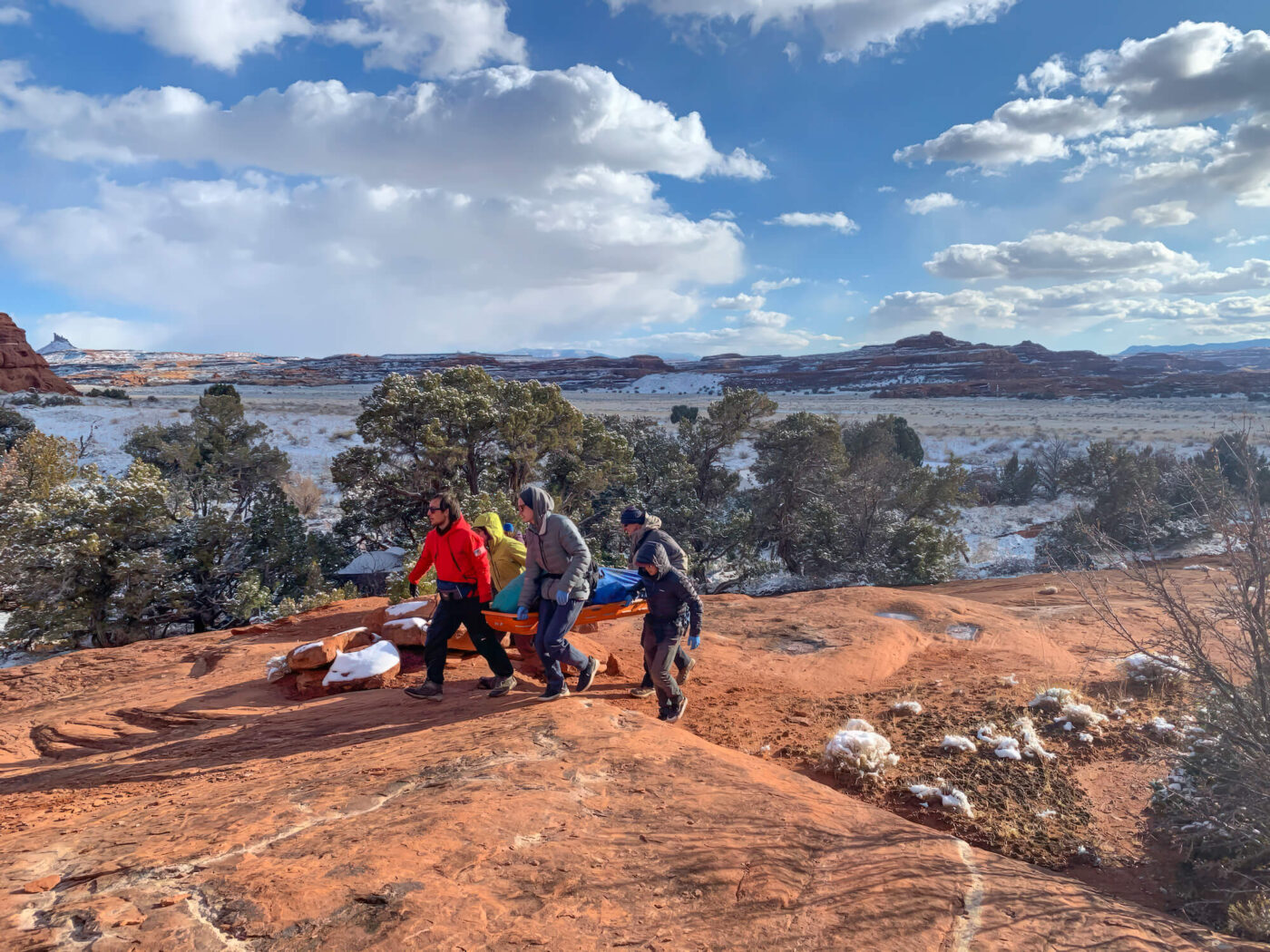
M litter carry kanab

- Info acquisition
- Transportation
- Medical Care
- Communications

Resources and Updates About the Wilderness Risk Management Conference:

Report on Snakebite Incident Data Collected by American Association of Poison Control Center

Monday, August 10th, 2009

Toxicologist Frank Walter published this report in the Clinical Toxicology Journal. The report reviews snakebite incident data collected over several years by the American Academy  of Poison Control Center.